

Window curtains are much more than simple light blockers; they are the architectural softening element that ties your entire room's palette, acoustics, and furniture together.
Choosing the right curtains can transform a plain room into an opulent retreat, while the wrong pair can make a spacious lounge feel cramped and dated. In this master guide, our interior stylists break down the exact 6-step decision framework used when furnishing luxury homes across Pakistan and beyond.
Step 1: Determine Room Function & Light Needs
Before browsing fabric swatches, identify what role the window plays in your daily routine. Different living zones demand fundamentally distinct light control and privacy requirements.
In high-traffic formal lounges, preserving natural daylight while reducing glare and maintaining daytime privacy is key. In master bedrooms and nursery suites, achieving 100% room darkening for restorative sleep takes absolute precedence.
For ultimate flexibility in living rooms and master suites, install a dual-channel track: hang an airy sheer curtain on the inner track for daytime diffusion and a substantial blackout velvet or linen drape on the outer track for nighttime privacy.
Step 2: Select the Right Fabric Weight & Texture
Curtain drape is dictated by fabric density. Lightweight fabrics like pure linen and voile flutter elegantly with breezes, while heavy-weight chenilles and rich velvets hold structured, formal folds that insulate windows against extreme heat and outdoor traffic noise.
| Fabric Type | Light Filtration | Insulation & Sound | Best Suited Rooms |
|---|---|---|---|
| Linen Blend | Soft Diffused Light | Moderate | Living Rooms, Dining Areas |
| Velvet | Room Darkening (70-90%) | High Thermal & Acoustic | Formal Drawing Rooms, Master Bedrooms |
| Sheer Voile | High Transparency | Low | Daytime Lounges, Sunrooms |
| 100% Blackout Triple Weave | Zero Light Bleed (100%) | Very High Thermal | Bedrooms, Home Theaters |
Step 3: Pick a Header Style (Pleats vs Eyelets)
The heading style determines how your curtains attach to the rod or track and how the fabric gathers into folds.
Eyelet (Grommet) headers slide smoothly over poles and create large, modern wave folds suited for contemporary minimalist spaces. Pinch pleats (double or triple pinch) create structured, timeless elegance suited for traditional and neoclassical Pakistani architecture.
Step 4: Understand the Golden Proportions of Hanging
Two common mistakes immediately compromise window aesthetics: hanging curtain rods too low and purchasing panels that are too narrow.
Hang your rod 4 to 8 inches above the window frame (or just 2 to 3 inches below the ceiling moulding) to draw the eye upward and make the ceiling feel significantly taller. Extend the rod 8 to 12 inches wider than the window frame on each side so the stacked curtains clear the glass when fully opened.
In Pakistani villas with 10-foot to 12-foot high ceilings, standard ready-made 7-foot curtains look awkwardly short. Always measure floor-to-ceiling and order bespoke made-to-measure drops to achieve the luxurious slight puddle (1 inch extra) on marble and hardwood floors.
Step 5: Pick the Best Lining (Blackout vs Standard)
Lining protects the face fabric from harsh UV sunlight deterioration, prevents color fading, and adds body to lightweight drapes. In hot climates, thermal blackout backing also reduces air conditioning energy costs by blocking exterior radiant heat transfer.
Step 6: Ready-Made vs. Made-to-Measure
While off-the-shelf ready-made curtains offer immediate convenience, they come in fixed standard lengths (usually 84” or 96”) that rarely fit non-standard window spans perfectly.
Custom made-to-measure curtains ensure exact window widths, bespoke drop lengths, custom fullness ratios (2.0x to 2.5x fabric gather), and your choice of heading pleats.
Quick Curtain Buyer's Checklist
- Accurately measure your track or pole width (not just the glass window aperture).
- Decide between pole mounting (visible rings/eyelets) or silent ceiling track mounting.
- Check window orientation: South and West facing windows require UV-resistant blackout lining.
- Select 2x to 2.5x fabric fullness for rich, deep folds rather than flat sheets.
- Order fabric swatches to test colors against your wall paint and interior lighting.
Frequently Asked Questions
Curtains should ideally have a total fabric width of 2 to 2.5 times the width of your window rod or track. This ensures deep, luxurious pleating rather than a taut, stretched appearance when drawn closed.

The Curtain Cart Editorial Team
Curtain Specialists & Interior Design Consultants
The Curtain Cart design team brings over 15 years of window dressing, textile craftsmanship, and custom curtain installation experience across Pakistan. From modern Rawalpindi penthouses to contemporary Islamabad villas, we deliver flawless, made-to-measure window treatments.
Shop Recommended Curtains for Curtain Buying Guide
Crafted to your exact window measurements with premium materials.


Related Guides & Styling Advice

Curtain Size Guide: How to Measure Curtains for Any Window
Learn how to accurately measure window width, hanging drop height, pole projection, and fabric fullness in feet and inches for a flawless made-to-measure fit.

Different Types of Curtain Styles Explained: Eyelet, Pinch Pleat & Beyond
Discover all major curtain header styles—from modern eyelets and architectural ripple folds to classic pinch pleats and casual rod pockets.
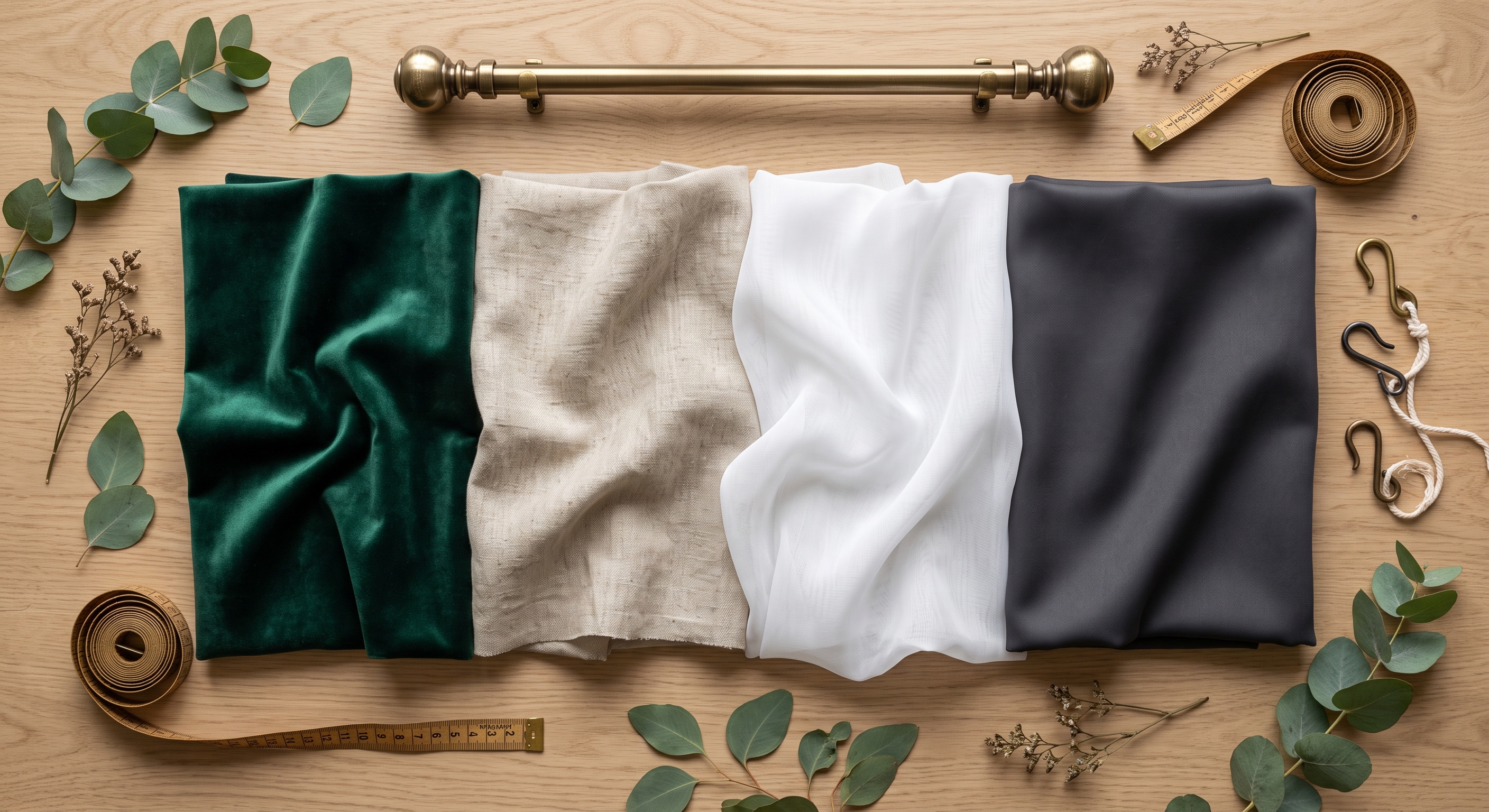
How to Choose the Right Curtain Fabric: Velvet, Linen, Sheer & Blackout
Understand tactile textures, drape characteristics, durability, and climate suitability across linen blends, royal velvet, sheer voiles, and thermal blackout fabrics.
Need Custom Curtains Tailored for Your Home?
Get made-to-measure curtains designed to your exact window dimensions. Free expert measurement and installation available across Rawalpindi & Islamabad.